

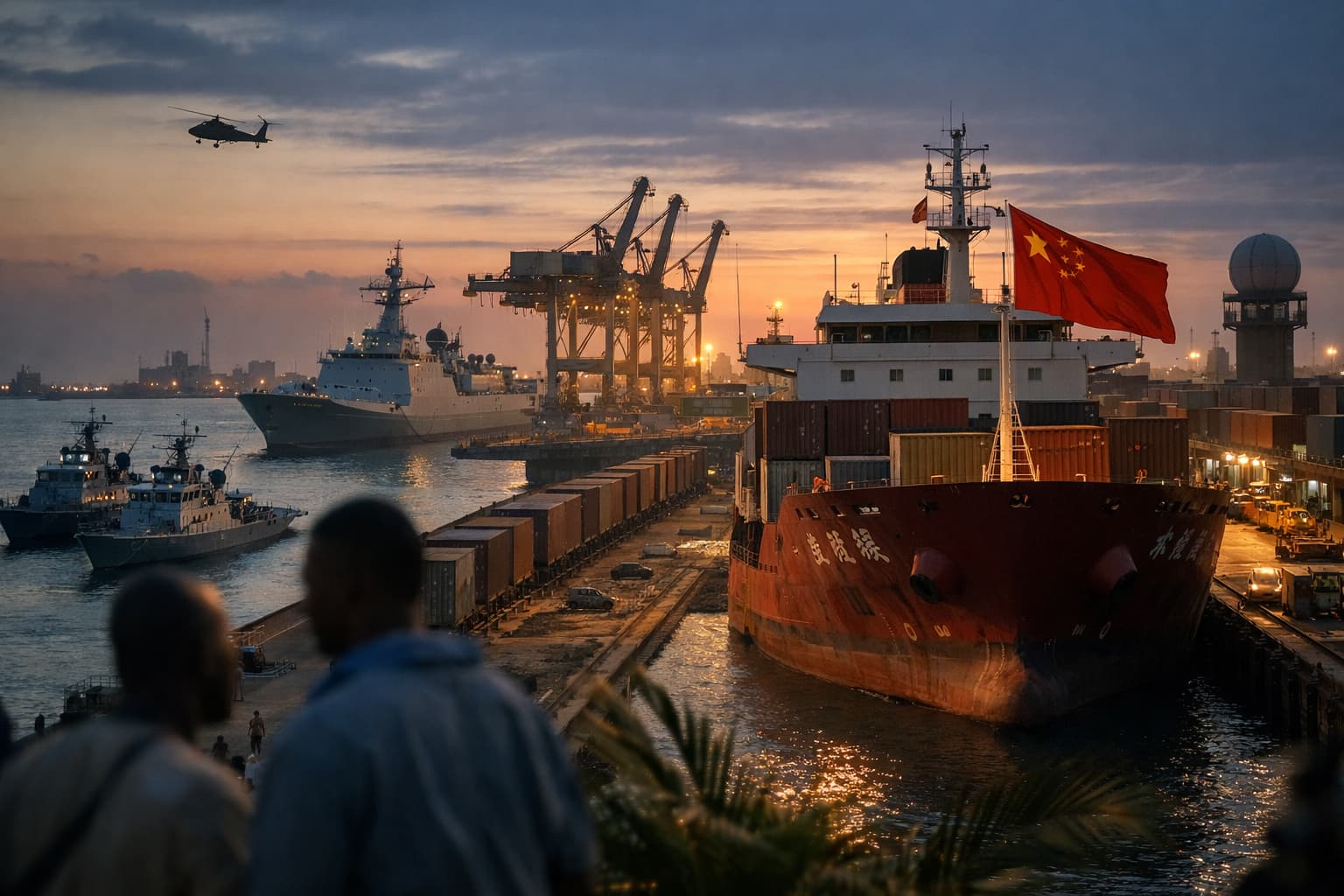
China’s expansion in Africa through ports and logistics infrastructure represents a multifaceted strategy combining economic investment, trade facilitation, and geopolitical positioning. Based on comprehensive mapping and analysis of Chinese-financed, developed, or managed ports across the continent, Beijing has established a significant presence in over 40 ports, with stakes in up to 78 facilities across 32 African nations as of 2026.
This network spans from North Africa’s Mediterranean coast to Southern Africa’s Atlantic and Indian Ocean shores, enabling enhanced logistics capabilities that support China’s Belt and Road Initiative (BRI).
Investments exceeding $50 billion since 2013 have driven port modernizations, rail connections, and industrial zones, boosting Africa-China trade to $348 billion in 2025 — a 17.7% increase from the prior year. However, this expansion raises concerns about debt sustainability, sovereignty erosion, and dual-use potential for military purposes, as evidenced by increased People’s Liberation Army Navy (PLA Navy) port calls and exercises. While offering economic benefits like improved connectivity and job creation, the strategy underscores China’s aim to secure supply chains and influence global maritime routes, prompting calls for balanced partnerships from African stakeholders.
Key Findings:
- China controls or operates over 40 African ports across 32 nations, with total BRI investments in Africa exceeding $160 billion
- Africa-China trade reached $348 billion in 2025, driven by infrastructure-enabled logistics
- PLA Navy port calls in Africa reached at least 15 in 2024-2025, the highest on record
- Debt sustainability concerns persist, with several nations renegotiating loan terms
- Strategic ports demonstrate dual-use potential, raising sovereignty and security concerns
Introduction: Mapping China’s Maritime Footprint
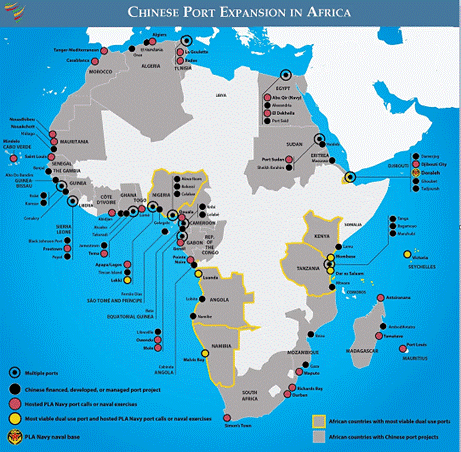
China’s port expansion in Africa has evolved from opportunistic infrastructure financing to a comprehensive maritime strategy that integrates economic development with geopolitical positioning. Contemporary mapping of Chinese port activities reveals a systematic approach to establishing presence along Africa’s critical coastlines, from the Mediterranean to the Indian and Atlantic Oceans.
The geographic distribution of Chinese port investments demonstrates strategic prioritization:
- East Africa: Heavy concentration along Indian Ocean trade routes, including Djibouti, Kenya, Tanzania, and Mozambique
- West Africa: Strategic positioning in the Gulf of Guinea, particularly Nigeria, Ghana, and Côte d’Ivoire
- North Africa: Mediterranean access points in Egypt and Algeria
- Southern Africa: Atlantic and Indian Ocean terminals in South Africa, Angola, and Namibia
Recent analysis identifies multiple categories of Chinese port engagement, differentiated by operational control, financing models, and military integration potential. Countries with the most viable dual-use ports include Nigeria, Angola, and Namibia, while ongoing projects span at least 15 additional nations.
This visualization underscores China’s strategic focus on Africa’s coastlines, aligning with broader logistics expansions under the BRI. As of 2026, China’s involvement has evolved from mere infrastructure financing to operational control and military integration, reshaping regional trade dynamics and global supply chains.
Overview of Chinese Port Investments: Scale and Scope
Investment Magnitude and Geographic Distribution
China’s port expansion in Africa has accelerated dramatically since the launch of the BRI in 2013, with investments totaling approximately $160 billion in broader development financing, including $50 billion specifically allocated to port infrastructure. This represents one of the largest foreign infrastructure investment programs in African history, surpassing traditional development partners in both scale and speed.
Recent mapping identifies at least 17 major projects in East Africa alone, including:
- Kenya: Mombasa Port expansion and Lamu Port-South Sudan-Ethiopia Transport Corridor (LAPSSET)
- Djibouti: Doraleh Multipurpose Port and Container Terminal
- Tanzania: Dar es Salaam, Tanga, Bagamoyo, and Mtwara port developments
- Mozambique: Nacala Corridor integration
West African hubs reflect equally significant investments. Nigeria’s Lekki Deep Sea Port, inaugurated in 2023, operates under a 45-year build-own-operate-transfer (BOOT) agreement with China Harbour Engineering Company and Tolaram Group, representing a $1.5 billion investment. Additional West African projects include ports in Ghana (Tema expansion), Côte d’Ivoire (Abidjan modernization), and Sierra Leone (Freetown container terminal).
Operational Models and Chinese State-Owned Enterprises
Chinese State-owned enterprises (SOEs) dominate African port operations through structured contractual arrangements:
| SOE | Key African Ports | Operational Model |
| China Merchants Group | Djibouti, Lomé (Togo), Lagos | BOOT, equity stakes |
| COSCO Shipping | Suez Canal Zone, Durban | Terminal operations |
| China Harbour Engineering | Lekki (Nigeria), Bagamoyo | Construction + operation |
| China Communications Construction Group (CCCC) | Multiple across 15+ countries | EPC + financing |
Table 1: Major Chinese SOEs operating African ports
The BOOT model, prevalent in at least 12 major projects, grants Chinese operators control for 25-99 years, during which they manage operations, collect revenues, and eventually transfer assets to host governments. This structure enables China to secure long-term strategic positioning while African nations gain immediate infrastructure without upfront capital.
In Tanzania, the revival of Bagamoyo Port negotiations in 2021 led to a restructured agreement emphasizing Tanzanian equity participation and technology transfer, reflecting evolving African negotiating capacity. The project, initially valued at $10 billion, now proceeds with phased development and local content requirements.
Integrated Logistics Ecosystems
Chinese port investments extend beyond maritime terminals to comprehensive logistics networks integrating rail, road, and industrial zones. This “port-rail-industrial park” model creates end-to-end supply chains that enhance China’s access to African resources and markets:
- Djibouti-Ethiopia Railway: 756 km standard gauge railway linking Doraleh Port to Addis Ababa, reducing transit time from 7 days to 12 hours
- Kenya Standard Gauge Railway: Connects Mombasa to Nairobi and eventually targeting Uganda and Rwanda
- Tanzania Central Railway: Planned extension linking Bagamoyo to DRC copper belt
- Angola Benguela Railway: Rehabilitation connecting Lobito Port to Zambian Copperbelt
These corridors facilitate resource extraction and export, particularly critical minerals. The DRC-Zambia copper belt, accessed via Dar es Salaam and Lobito, exemplifies how port investments enable China to secure cobalt, copper, and other inputs for manufacturing and renewable energy technologies.
Recent satellite imagery from 2026 reveals massive capacity upgrades in Mombasa (30% increase in container handling), Djibouti (doubling of berth capacity), and Lekki (Africa’s deepest port at 16.5m draft), positioning these facilities as regional transshipment hubs.
Logistics and Economic Impact
Trade Facilitation and Volume Growth
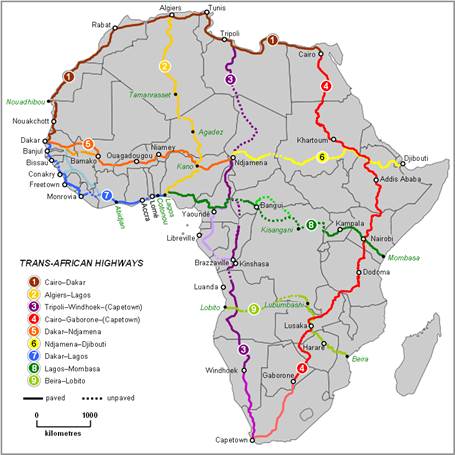
Logistics infrastructure forms the backbone of China’s African strategy, enabling efficient trade flows and supply chain resilience. The cumulative effect of port, rail, and road investments has dramatically reduced transit times and costs, facilitating unprecedented trade growth.
In 2025, China-Africa trade reached $348 billion, representing a 17.7% year-over-year increase and solidifying China’s position as Africa’s largest trading partner for the 15th consecutive year.
This growth was driven by:
- 25.8% surge in Chinese exports to Africa, totaling $193 billion (machinery, electronics, textiles, consumer goods)
- 5.4% increase in African exports to China, reaching $155 billion (raw materials, minerals, agricultural products)
- Reduction in average shipping costs by 30-40% on major corridors since 2015
- Decrease in average port dwell time from 14 days to 5-7 days at upgraded facilities
Port capacity expansions have been substantial. Dar es Salaam’s Chinese-financed upgrades increased annual throughput from 5 million to 13 million TEUs between 2015 and 2025. Djibouti’s container terminal now handles over 2 million TEUs annually, transforming the nation into a regional logistics hub serving landlocked Ethiopia, South Sudan, and beyond.
Economic Benefits and Development Outcomes
Chinese port investments generate tangible – in the short term – economic benefits for host nations:
Job Creation: Direct and indirect employment from port construction and operations exceeds 100,000 positions across major projects. Lekki Port alone created 200,000 jobs during construction and 170,000 permanent positions. However, concerns persist about labor conditions and the dominance of Chinese workers in skilled positions.
Technology Transfer: Modern port management systems, crane operations, and logistics software represent knowledge transfers. Countries like Ethiopia and Kenya have established training programs with Chinese partners, though critics argue these remain limited compared to traditional development assistance models.
Infrastructure Modernization: Beyond ports, associated investments in rail, roads, and special economic zones (SEZs) upgrade national infrastructure. The Djibouti International Free Trade Zone, Africa’s largest at 48.2 km², operates under a 50-year China Merchants concession, attracting manufacturing and logistics tenants.
Value-Added Processing: Initiatives like Africa’s first EV battery gigafactory in Morocco, scheduled for 2026 production with Chinese partnership, signal potential shifts from raw material export toward value-added industries. Similar projects are emerging in lithium processing (Zimbabwe) and rare earth refinement (Kenya).
Challenges: Debt, Dependency, and Asymmetry
Despite benefits, significant challenges characterize China-Africa port financing:
Debt Sustainability: Many projects rely on loans from China Development Bank and Export-Import Bank of China at commercial or near-commercial rates (2-6% interest, 15-20 year terms). Countries like Kenya, Zambia, and Angola carry substantial Chinese debt, raising default risks. Kenya’s SGR debt exceeds $5 billion, requiring annual repayments that strain government budgets.
The precedent of Sri Lanka’s Hambantota Port, leased to China Merchants for 99 years after debt default, heightens African concerns about sovereignty loss through “debt-trap diplomacy”. While Chinese officials dispute this characterization, citing debt restructuring and write-offs, the power asymmetry remains evident.
Trade Imbalance: Africa’s persistent trade deficit with China ($38 billion in 2025) reflects concentration in low-value commodity exports versus high-value manufactured imports. Port infrastructure primarily facilitates resource extraction rather than African industrialization, perpetuating colonial-era trade patterns.
Local Content Gaps: Chinese contractors often import materials and labor, limiting local economic participation. The 2024-2027 Forum on China-Africa Cooperation (FOCAC) Action Plan emphasizes technology transfer, local content requirements, and joint ventures, but implementation varies widely.
Strategic and Geopolitical Implications
Dual-Use Infrastructure and Military Dimensions
The strategic implications of China’s port network extend well beyond commercial logistics. Analysis of port characteristics, PLA Navy activity patterns, and Chinese official statements reveals deliberate dual-use planning — facilities designed for both economic and potential military purposes.
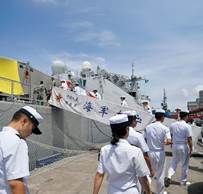
Chinese sailors boarding a PLA Navy
vessel in Apapa, Nigeria, 2023
Djibouti Naval Base: China’s first overseas military base, established in 2017 at Doraleh, represents the most explicit military integration. Originally justified for antipiracy operations, the facility has expanded significantly:
- Berth capacity increased to accommodate destroyers, frigates, and potentially aircraft carriers
- Underground bunkers and hardened facilities visible in 2024 satellite imagery
- Permanent garrison expanded from 2,000 to 3,000+ personnel
- Strategic positioning 8 km from U.S. Camp Lemonnier, France’s largest overseas base, and Japanese Self-Defense Force facilities
This concentration of great power military infrastructure in Djibouti underscores the Horn of Africa’s emergence as a strategic competition zone.
PLA Navy Port Calls: Documented PLA Navy port visits to Africa reached at least 15 in 2024-2025, the highest annual total on record. Key patterns include:
- Regular calls at Djibouti, Dar es Salaam, Mombasa, and Lagos for antipiracy task force rotations
- Joint naval exercises with South Africa (“Mosi” series), Tanzania, and Nigeria
- Port visits coinciding with major Chinese-built infrastructure inaugurations
- Increasing sophistication of vessels, including Type 055 destroyers and Type 075 amphibious assault ships
Multilateral exercises like “Will for Peace 2026” under BRICS formats signal institutionalization of China’s naval presence in African waters.
Dual-Use Port Characteristics: Analysis identifies several ports with enhanced military utility:
| Port | Dual-Use Features |
| Victoria (Seychelles) | Deep draft, repair facilities, isolated location |
| Tin Can Island (Nigeria) | Large berths, proximity to naval base |
| Walvis Bay (Namibia) | Strategic Atlantic position, deep water |
| Nacala (Mozambique) | Mozambique Channel chokepoint, upgrade capacity |
While none currently function as declared military bases beyond Djibouti, infrastructure upgrades (deepening, lengthening berths, fuel storage) create latent military capability that could be activated in crisis scenarios.
Sea Lines of Communication and Economic Security
China’s African port network directly supports its sea lines of communication (SLOC) security strategy. Approximately 80% of China’s oil imports transit the Indian Ocean, passing through critical chokepoints:
- Suez Canal: 12% of global trade; Chinese port investments in Egypt (Port Said, Alexandria) secure access
- Bab el-Mandeb Strait: 6.2 million barrels/day oil transit; Djibouti base provides security
- Mozambique Channel: Alternative route for oil tankers; Nacala and Maputo upgrades enhance presence
- Cape of Good Hope: Alternative to Suez; South African port agreements provide access
This infrastructure enables China to protect energy supplies, secure resource exports from Africa, and project power along maritime trade routes carrying 90% of global trade by volume.
Geopolitical Competition and Sovereignty Risks
Chinese control over approximately one-third of Africa’s port capacity creates strategic leverage with implications for sovereignty, intelligence gathering, and great power competition:
Sovereignty Concerns: Long-term operational concessions grant Chinese entities control over critical national infrastructure. Contract terms often include dispute resolution in Chinese courts, limiting host government recourse. In extreme scenarios, port control could enable economic coercion through selective service denial or intelligence collection via port operations data.
Intelligence and Surveillance: Port management systems, shipping data, and cargo information provide intelligence value. Chinese-manufactured port equipment, including cranes and IT systems, may contain embedded surveillance capabilities, as alleged by U.S. officials regarding Chinese-made cranes in American ports.
Great Power Competition: U.S., Indian, and European responses reflect concern about Chinese dominance:
- U.S. “Prosper Africa” initiative and Lobito Corridor investment (competing Angolan route)
- India’s “Project Mausam” focusing on Indian Ocean littoral infrastructure
- EU “Global Gateway” committing €300 billion for infrastructure competing with BRI
- Quad (U.S.-Japan-India-Australia) coordination on Indo-Pacific infrastructure
Public discourse, particularly on platforms like X (formerly Twitter), increasingly frames Chinese expansion as “Colonialism 2.0,” calling for counter-alliances to prevent further encroachment, especially in resource-rich regions like the Gulf of Guinea.
The Horn of Africa risks becoming a “superpower contest zone,” with China, U.S., France, Italy, Japan, and others maintaining military presence in Djibouti and surrounding waters. This militarization complicates regional stability and African agency in security governance.
Policy Recommendations
For African Governments
Negotiate Strategic, Not Dependent, Terms:
- Insist on equity participation models to maintain control and prevent long-term foreign dominance of national assets.
- Demand verifiable technology transfer and vocational training programs tied to measurable outcomes, not empty pledges.
- Make local content requirements legally binding to protect jobs, industries, and supply chains from external capture.
- Require neutral international arbitration for disputes, avoiding Chinese domestic courts where impartiality is questionable.
- Conduct thorough independent debt sustainability assessments before accepting any Chinese loan offer.
Diversify and Secure Partnerships:
- Open port and infrastructure tenders to U.S., European, Japanese, and Gulf investors to prevent Chinese monopolization.
- Leverage strategic mineral and energy assets through transparent offtake agreements (e.g., Zambia-U.S. critical minerals framework) that ensure reciprocal benefits.
- Work with the African Development Bank, World Bank, and European Investment Bank for co-financing that limits exposure to Chinese debt leverage.
- Coordinate regionally through the African Union and RECs to strengthen collective bargaining power against asymmetric Chinese offers.
Reinforce Governance and Sovereignty:
- Publish all infrastructure and concession contracts to ensure public transparency and accountability.
- Establish independent oversight bodies to monitor compliance with environmental, labor, and ethical standards.
- Strengthen port authority capacity to regulate foreign operators and prevent dual-use activities under commercial cover.
- Develop national maritime strategies that privilege sovereign control and long-term national interest over short-term financing gains.
For International Stakeholders
Counterbalance Chinese Influence through Allied Investment:
- Expand G7 Partnership for Global Infrastructure and Investment (PGII) as a credible, democratic alternative to the Belt and Road.
- Prioritize funding for high-impact, strategic corridors such as the Lobito Corridor to offer Atlantic access independent of Chinese control.
- Provide expert assistance to build transparent African maritime governance frameworks aligned with international standards.
- Offer debt restructuring and relief mechanisms that reduce Beijing’s leverage over vulnerable states.
Strengthen Maritime and Security Cooperation:
- Deepen NATO and EU naval partnerships with African coastal nations through training, maintenance, and equipment programs.
- Invest in satellite surveillance, data sharing, and intelligence support to monitor Chinese dual-use port expansions.
- Coordinate Western and Indo-Pacific responses through NATO, the Quad, and regional platforms to ensure a rules-based maritime order.
- Support African-led security frameworks such as the Yaoundé and Djibouti Codes of Conduct with Western logistical and financial backing.
Enhance Diplomatic and Development Engagement:
- Integrate Africa more substantially into U.S., EU, and Indo-Pacific strategic frameworks as an equal partner, not a geopolitical afterthought.
- Promote genuine partnerships based on transparency, capacity-building, and respect for African decision-making — not opaque lending.
- Confront Chinese predatory lending and opaque concessions through diplomatic and institutional pressure while avoiding divisive Cold War rhetoric.
- Back multilateral debt relief and infrastructure funding mechanisms that uphold open, rules-based competition.
For China–Africa Relations
Restructure the Belt and Road Initiative (BRI):
- Shift from debt-heavy infrastructure financing to more balanced, transparent, and concessional instruments.
- Conform to international norms on environmental and social assessments rather than opaque Chinese domestic standards.
- End secrecy in contract negotiations and introduce independent auditing mechanisms.
- Refocus Chinese involvement toward supporting African industrialization rather than reinforcing raw material dependency.
Implement FOCAC Commitments with Accountability:
- Translate rhetorical pledges from the 2024–2027 FOCAC Action Plan into enforceable agreements with performance tracking.
- Establish joint China–Africa monitoring commissions including civil society observers to ensure transparency.
- Commit to neutral arbitration for dispute resolution under recognized international legal institutions.
- Broaden cooperation to educational and cultural domains to offset the transactional nature of China’s current engagements.
Conclusion
China’s port and logistics expansion in Africa, as comprehensively mapped and analyzed, represents a cornerstone of its global strategy — one that simultaneously delivers economic development benefits while advancing geopolitical objectives. With over 40 ports under Chinese financing, development, or management across 32 nations, and investments exceeding $160 billion since 2013, this infrastructure network has fundamentally reshaped Africa-China economic relations and regional connectivity.
The dual nature of this expansion presents both opportunities and risks for African nations. On one hand, modernized ports, integrated rail corridors, and special economic zones have boosted trade, created jobs, and upgraded infrastructure at unprecedented scale and speed. Africa-China trade reaching $348 billion in 2025 testifies to these logistics improvements.
On the other hand, debt sustainability challenges, sovereignty concerns over long-term foreign control, and the dual-use potential of ports for military purposes raise legitimate questions about the long-term implications of Chinese dominance in this critical sector.
The strategic dimensions — evidenced by China’s first overseas naval base in Djibouti, increased PLA Navy port calls, and systematic positioning along key sea lines of communication — underscore that this is not merely a commercial endeavor. It represents deliberate great power positioning in a region central to global energy flows, mineral supply chains, and maritime trade routes.
Beyond economic competition, the security dimension is paramount.
NATO and its partners should view Africa’s maritime domain as an emerging frontier for strategic stability, given the growing presence of Chinese dual-use ports capable of supporting military logistics. Establishing a forward-oriented NATO maritime engagement strategy — integrated with EU NAVFOR and regional African commands — would enable real-time intelligence sharing, port security audits, and joint readiness exercises in zones of strategic vulnerability such as the Red Sea, Gulf of Guinea, and Mozambique Channel. This networked approach would both safeguard global sea lines of communication and prevent the gradual militarization of critical African ports under foreign control. By embedding Western naval cooperation as a stabilizing, capacity-building force, NATO can ensure that Africa’s waterways remain open, secure, and governed under international law rather than unilateral influence
As FOCAC evolves and African nations gain negotiating experience, the imperative is clear: maximize economic benefits through improved terms, diversify partnerships to prevent overreliance on any single actor, and assert sovereignty over critical infrastructure. International stakeholders, particularly the U.S., EU, and emerging Indo-Pacific partners, must offer credible alternatives through competitive investments and genuine development partnerships that respect African agency.
The future of Africa’s port infrastructure should be determined by African priorities — economic transformation, industrialization, and sustainable development — rather than external geopolitical competition. Achieving this balance requires vigilant governance, transparent negotiations, and multilateral cooperation that places African interests at the center of this maritime transformation.